Waxed cord
Confirm the underlying fiber, wax treatment, diameter and sample feel. The word “waxed” does not establish whether the fiber is cotton or another material.
CORD SELECTION · MATERIAL / CONSTRUCTION / DIAMETER / COLOR
A useful cord specification includes material, construction, diameter and color. Choose these together with the bracelet’s metal parts and adjustment system.
Confirm the underlying fiber, wax treatment, diameter and sample feel. The word “waxed” does not establish whether the fiber is cotton or another material.
Confirm fiber specification, braid construction, diameter and selected color. The supplied chart is a selection reference; specifications and availability are reviewed for the chosen sample.
Our photographed references include braided leather charts marked 3 mm, 4 mm and 5 mm. Confirm leather specification, finished diameter, surface and flexibility for the selected option.
Send a reference sample and the required specification. Additional materials are reviewed separately.
Cord diameter affects visual balance, threading clearance, knot size and adjustment. Send metal-hole dimensions or a reference so cord and connection can be reviewed together. A sample is needed to confirm finished fit.
Color references show photographed cord samples. Lighting, reflective covering and screen display can change the perceived shade. Choose a reference or send a target color, then approve a physical sample before production.
A shade shown on one material is not automatically available on another material or at another diameter. Selected material, color, diameter and quantity are checked before quotation.
Use these photographs to narrow your color direction. Describe a color and its position in the chart when contacting us. Material, diameter, availability and final color are confirmed through a physical sample. Headers and surrounding background are blurred with AI-assisted editing. Use these display references to discuss color; approve the actual cord sample before production.
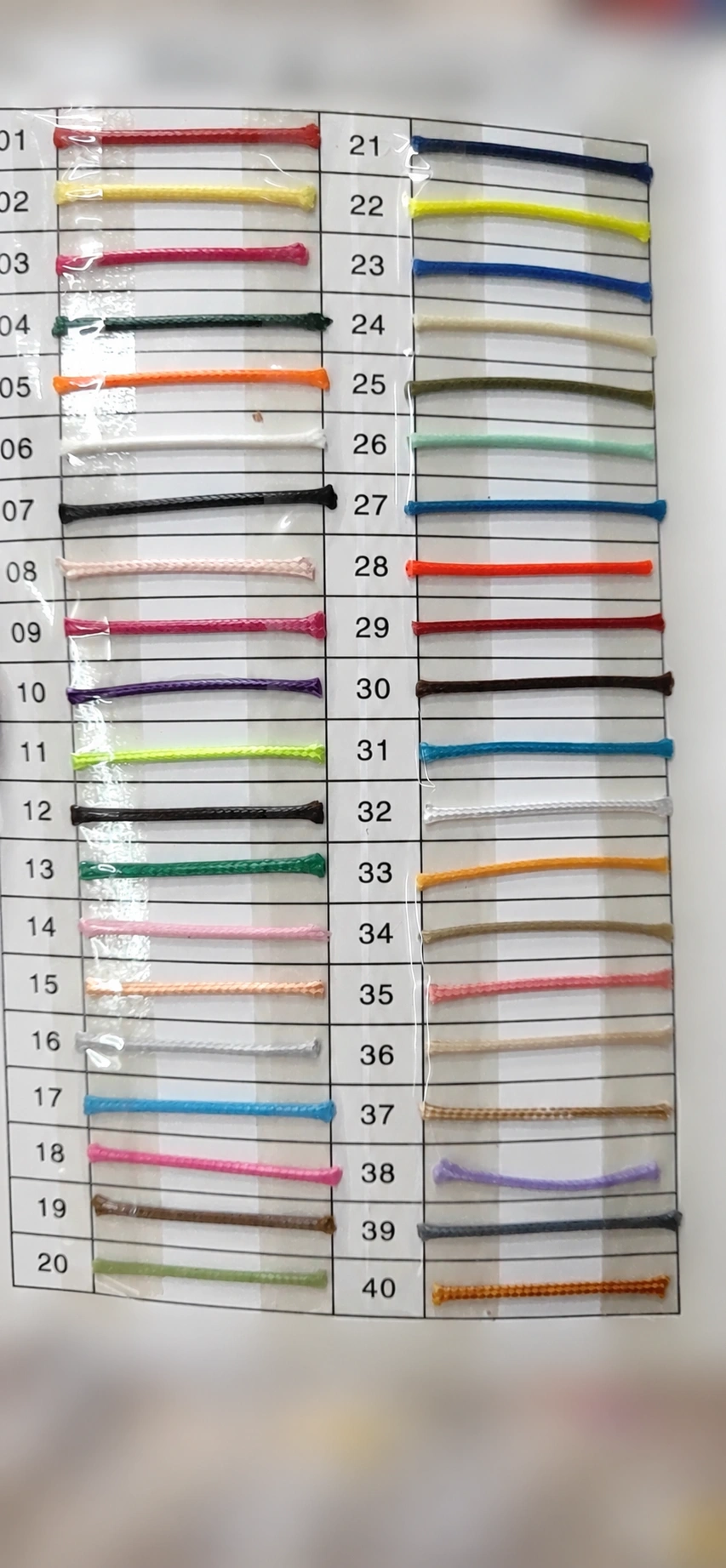
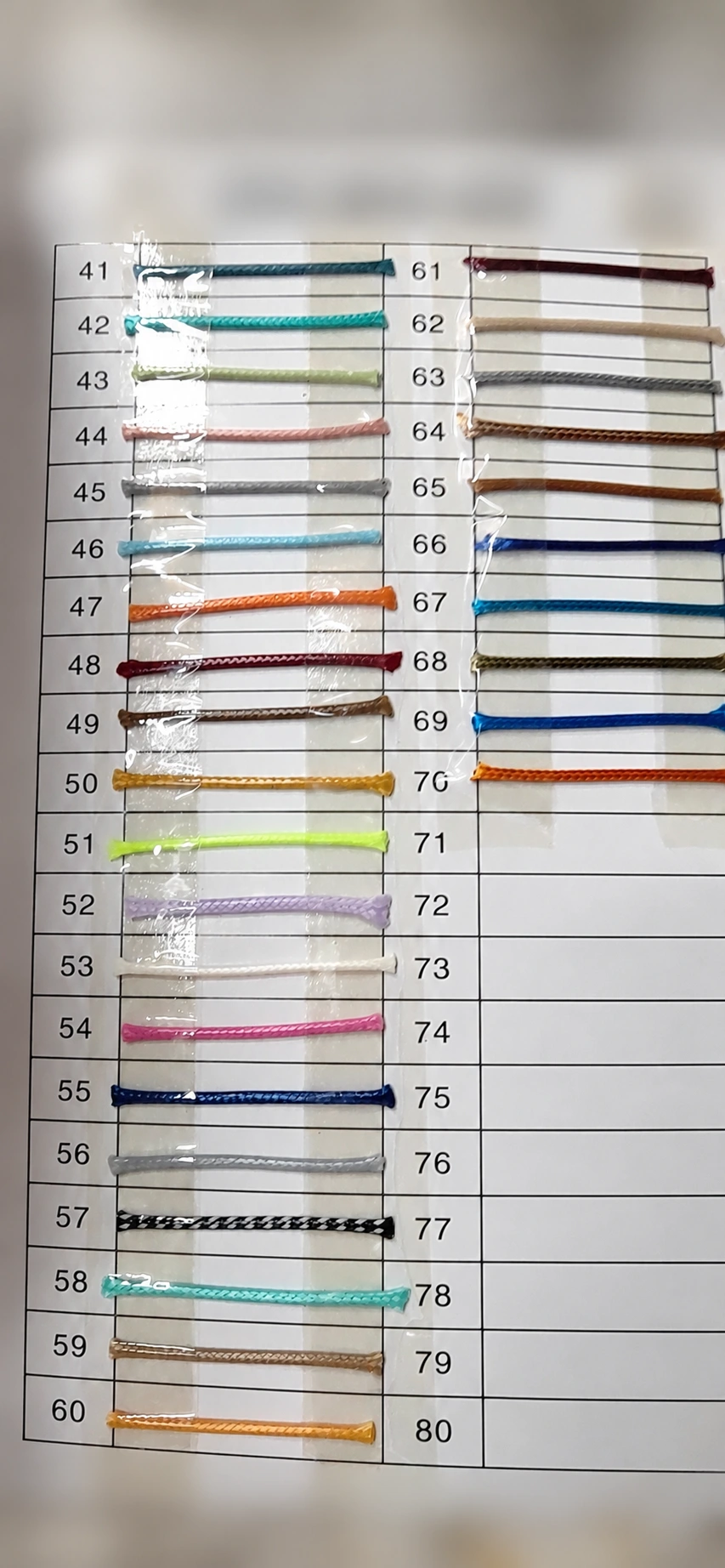
Compare cord beside the actual metal finish. Neutral, light and accent colors can create different collection directions. Approve the combination on a finished sample.
Ready to review a cord option? Include the chart image and swatch position, preferred material, diameter and quantity per color. If you are unsure, send a reference and tell us which choices need a recommendation.
Discuss Cord Materials & Colors →Record the actual cord sample, its construction and the number of strands at each opening. Check both assembly and adjustment with the selected metal parts. Two cords sold under the same nominal diameter should not be assumed interchangeable without a sample check.
Ask whether the selected cord will use a knot, cap or another suitable end treatment. The method must suit the fiber and surface treatment. Do not specify heat sealing for every cord; confirm the method and inspect the finished end on the sample.
A chart number is meaningful only with its chart and material. A similar color name on a different cord is not automatic confirmation of a match. Blanks or missing swatches in a photographed chart are not available-color listings.
If the bracelet is intended for frequent water contact, sports or daily adjustment, include those conditions in the brief. Agree appropriate checks for the complete bracelet, including color transfer, surface change and adjustment behavior where relevant. These are project review points, not a blanket claim of waterproofness, colorfastness or durability.
No. Braiding describes construction. Confirm the underlying material separately.
No. Fiber composition must be confirmed for the selected cord.
Availability, material, diameter and quantity are checked for the selected option.
Use it to narrow your selection. Approve the physical cord or finished bracelet sample before production.