304 is standard for most ready-stock items. 316 and 316L are evaluated for suitable custom projects and normally require higher MOQs.
Compare materials →Jewelry manufacturing resources
Buyer Knowledge Center
Practical, evidence-based guides for jewelry brands, wholesalers and sourcing teams. Compare stainless steel grades, understand 18K real-gold PVD vacuum plating, prepare custom projects and make better production decisions before requesting a quote.
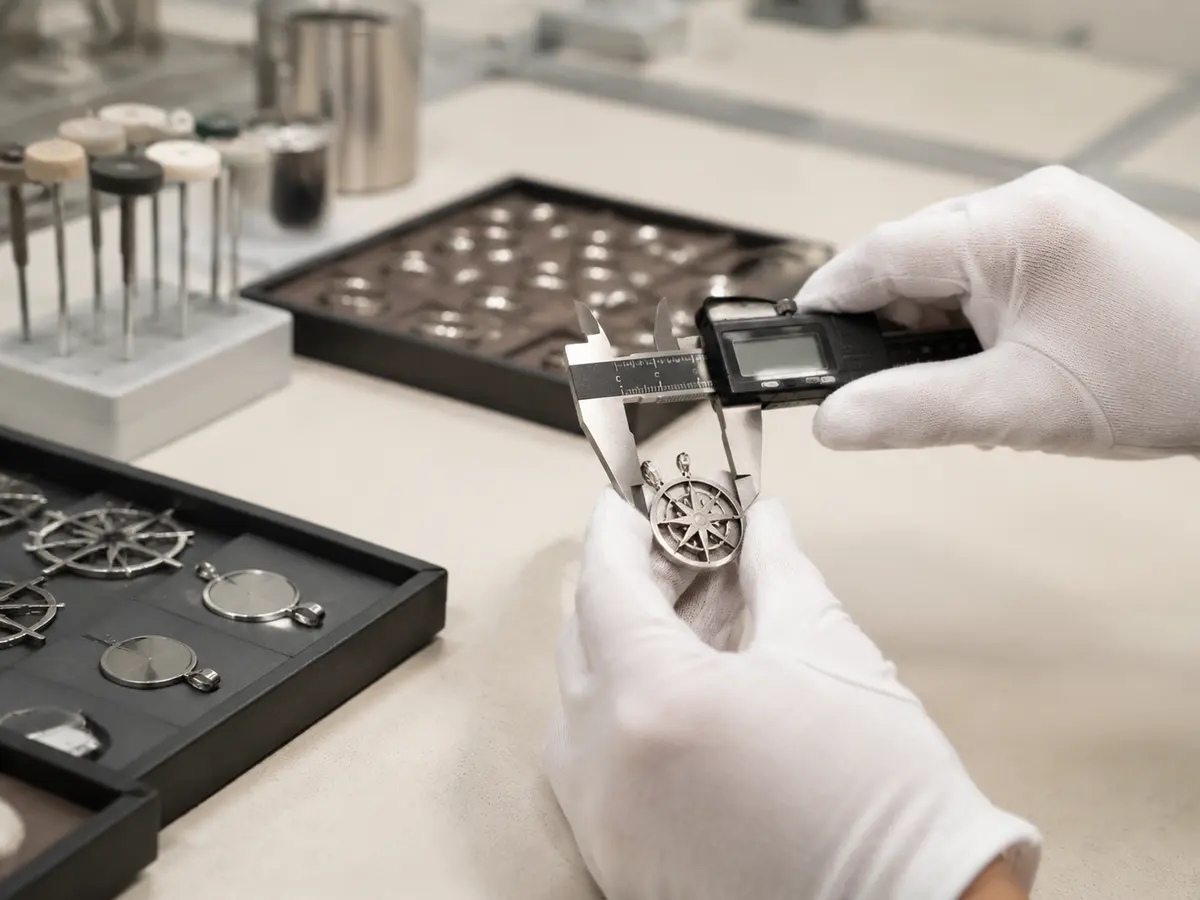
Built for real purchasing questions.Materials, finish, MOQ, sampling, lead time, manufacturability and repeat-production quality.
Quick buyer answers
Key points before you request a quote.
CHARMOND uses 18K real-gold PVD vacuum plating, typically 0.03–0.06 μm, subject to the approved project specification.
Review plating guidance →Working guidance is about 100 pieces for cutting, 200–300 for casting and 600 for hydraulic pressing. Final MOQ follows the design.
Plan the order →Steel grade alone does not establish universal compliance. Testing and documentation depend on the finished product, market and agreed standard.
Understand testing →Start with the decision you need to make.
This center connects technical information with practical buying decisions. Each guide explains the trade-offs, the questions to ask and the next page to visit when you are ready to discuss production.
Materials & Safety
Understand 304, 316 and 316L, release testing, skin-contact concerns and natural material variation.
View materials resources →Plating & Quality
Compare finish routes, clarify gold-plating expectations and understand the checkpoints behind repeatable quality.
View quality resources →Customization
Move from an idea, image or sample to a manufacturable design, approved sample and repeat production.
View customization resources →Buying Guides
Plan MOQ, sampling, lead time, cost and supplier communication before requesting a final quotation.
View buying resources →Woven & cord bracelet projects
Choose the right bracelet starting point.
Compare real project examples and prepare the details needed for a sample review.
Woven & embroidered bracelets
Explore bracelet wording, color combinations, adjustable styles and optional metal tags. Review artwork, sample and finished-product examples before preparing your brief.
Explore custom woven bracelets →
View the design guide & project examples →Adjustable cord bracelets
Review photographed samples, cord color references, metal bars and logo tags. Prepare wrist size, adjustment and engraving requirements for project review.
Explore custom cord bracelets →
Cord materials & color references →
Sizing & adjustable closures →
Metal bars & logo tags →Answers buyers use before committing.
These pages address the questions that most often change the design, quotation, sample plan or quality standard.
Materials, Plating & Compliance
Compare common stainless steel routes, understand real-gold PVD vacuum plating and plan market-specific testing.
304 or 316/316L? · What should a report cover? · How should plating be specified?Read the materials guide →How Stainless Steel Jewelry Is Manufactured
Follow the route from design review and process selection to finishing, assembly, inspection and repeat production.
Which process fits the shape? · Where is quality controlled? · What changes at scale?Explore the process →Can This AI Jewelry Design Be Manufactured?
Understand how unsupported geometry, unrealistic surfaces and micro details are translated before CAD.
Can the idea be preserved? · Which details need support? · What should be reviewed first?Review AI design feasibility →Jewelry Design Tolerances & Detail Limits
See which fine lines, openwork, stone layouts, grooves and edges are usually safe, adjustable or high risk.
Is the detail repeatable? · Can it be polished? · Will it survive handling and wear?Review detail limits →MOQ, Sampling, Lead Time & Cost
Understand how tooling, materials, complexity, packaging and quantity shape the development plan.
Why does MOQ change? · How long does sampling take? · What affects the final cost?Plan the order →Stainless Steel Jewelry Manufacturing FAQ
Find direct answers about materials, finishes, OEM/ODM, samples, testing, MOQ and production communication.
What information should I send? · Can I start small? · What is confirmed before bulk?Browse the FAQ →Private Label Jewelry Manufacturer
Plan logo details, packaging, finish selection, sampling and repeat-order support for a collection sold under your own brand.
What can be customized? · Which process fits the design? · How is the first order planned?Build your private label collection →Factory Capabilities & Quality Control
Review CHARMOND’s confirmed equipment, manufacturing coordination and inspection stages from incoming materials to shipment release.
Who controls quality? · What is inspected? · Which capabilities are confirmed?Review factory capabilities →Cutting vs Casting vs Hydraulic Pressing
Compare design suitability, tooling logic, finishing concerns and the confirmed process-based MOQ for three production routes.
100, 200–300 or 600 pieces? · Which geometry fits each route? · When is tooling justified?Compare manufacturing processes →Custom Jewelry Logo & Branding Methods
Compare laser marking, stamping, moulded logos and metal tags, including artwork preparation, process-based fees and sample timing.
Which method fits? · What files are needed? · What fees and timing apply?Review logo methods →Jewelry Sampling & Prototype Development
Compare ready-stock and custom sample fees, process-based timelines, revision charges and the 2,000-piece fee-return policy.
What costs apply? · How long does each process take? · When are eligible fees returned?Plan a sample →Jewelry Packaging Coordination & Buyer-Supplied Packaging
Review standard OPP packing, optional standard jewelry boxes and packing with finished branded materials supplied by the buyer. Confirm quantities, dimensions, SKU matching and delivery timing before shipment.
What packing is included? · What should the buyer supply? · When should materials arrive?Review packaging coordination →Jewelry Quality Control & Pre-Shipment Inspection
Understand the standard inspection scope, approximate 10% sampling, nonconforming-item handling and buyer-arranged third-party inspection.
What is checked? · Is inspection 100%? · Who pays for third-party inspection?Review pre-shipment QC →Browse by purchasing topic.
Use the directory for focused research, or follow the buyer path below when you are preparing a new project from the beginning.
Materials & Safety
Materials, plating and complianceJewelry testing reports & customer confidentialityPlating & Quality
Manufacturing and QC checkpointsFactory capabilities and quality controlQuality control and pre-shipment inspectionFinish access and detail limitsCustomization
OEM / ODM manufacturingPrivate label jewelry manufacturingCustom jewelry logo and branding methodsPackaging coordination and buyer-supplied materialsAI design feasibility reviewProduction-ready detail engineeringBuying Guides
Prepare a jewelry manufacturing project briefMOQ, sample, lead time and costSampling and prototype developmentCutting, casting and hydraulic pressingExplore product directionsBuyer manufacturing FAQMove from an idea to a clear production brief.
You do not need a finished technical package before contacting us. The right sequence helps both sides identify the important decisions early.
Choose a direction
Review collections, materials and the target market for the product.
Check feasibility
Identify risky geometry, finish access, stone settings and detail limits.
Plan the order
Clarify quantity, samples, timing, packaging and approval checkpoints.
Request a review
Send the reference, product type, quantity, material, finish and target market.
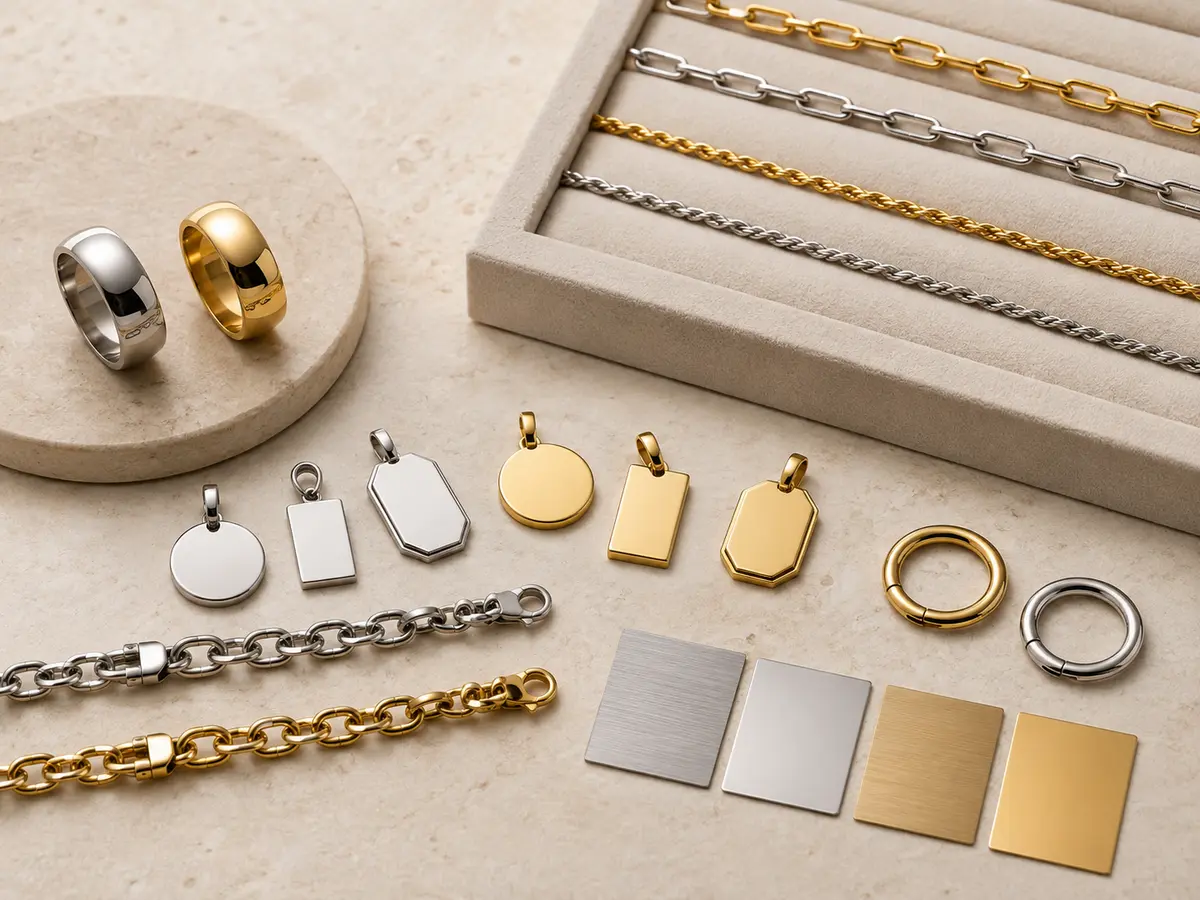
Technical content, commercial purpose
Use the guides to prepare a better inquiry.
The most useful request is not simply “How much?” A clearer brief helps us recommend the right material, process, finish, sample route and quantity.
- Product type or reference
- Target quantity
- Material and finish
- Destination market
- Logo and packaging
- Required timing
Common questions
Start with the topic closest to your current decision. You can contact us before every detail is final.
Where should a first-time buyer start?
Begin with the MOQ, sampling, lead-time and cost guide. It explains the information that changes the development plan and quotation.
I only have an image or sketch. Which guide should I read?
Start with the AI design feasibility guide, then review the detail and tolerance page. Both explain how a visual idea is translated into production-ready geometry.
Where can I compare 304 and 316/316L stainless steel?
The materials, plating and compliance guide explains the practical differences, common commercial routes and why final compliance depends on the tested product and destination market.
Do these guides replace a project review?
No. They help you prepare the right questions. Final dimensions, processes, prices, MOQ and claims are confirmed after reviewing the actual design, material, finish, quantity and market requirements.
Ready for a practical answer?
Send the design before simplifying it.
Share the original render, sketch, CAD file, sample photo or product direction. We will identify the next engineering and production step.