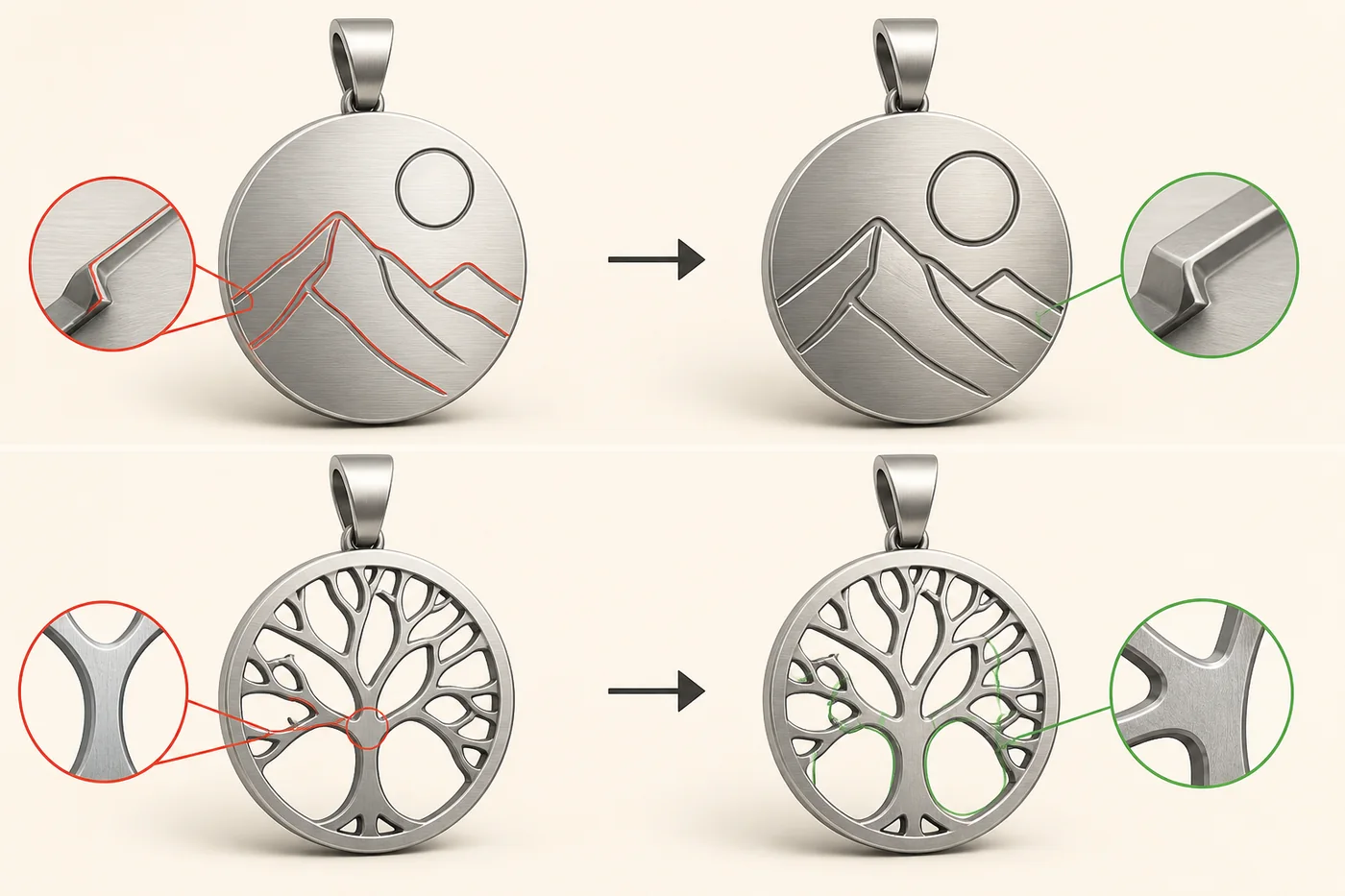
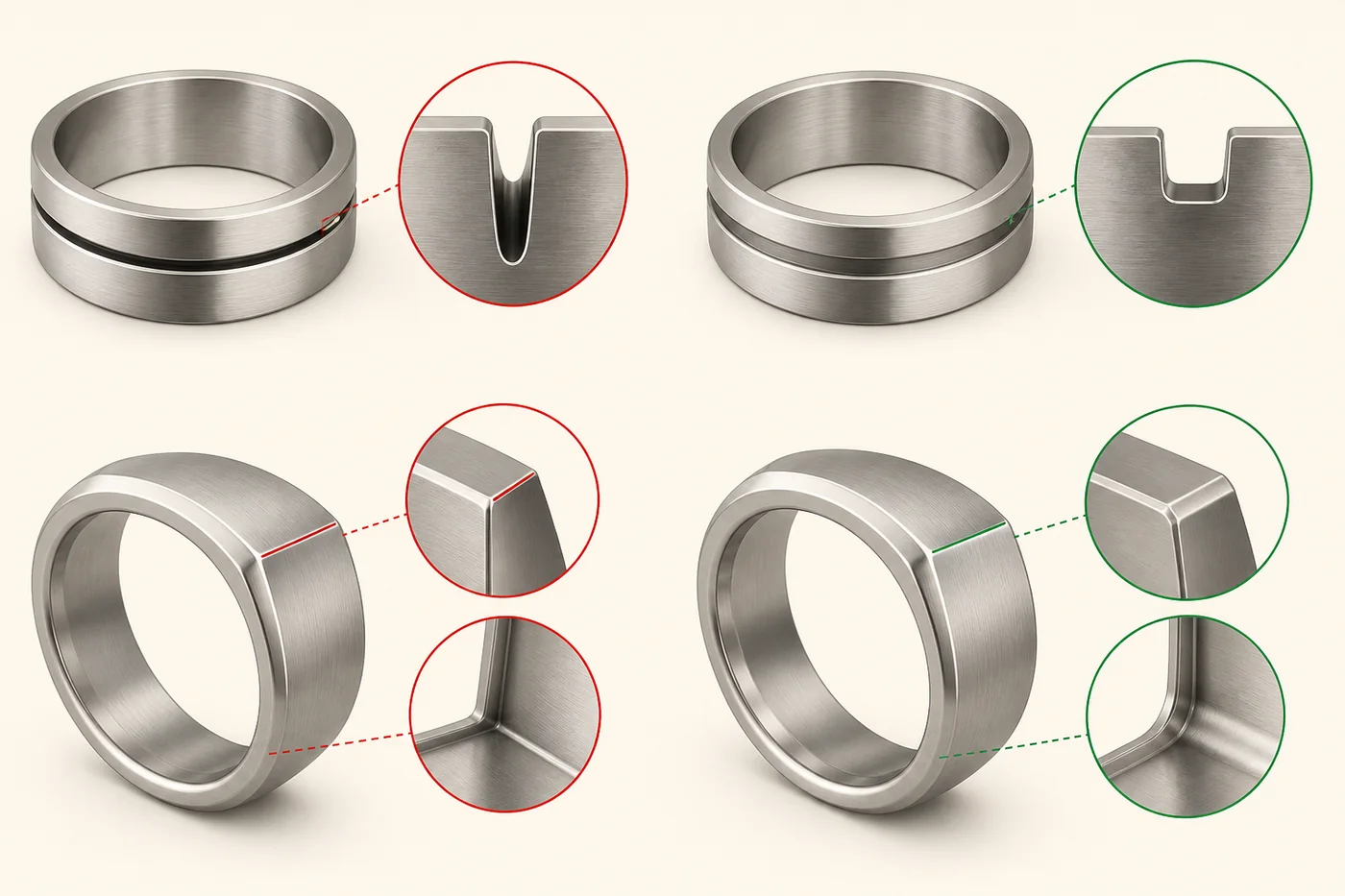
| Typical design fit | Flat or layered forms, letters, tags, geometric outlines, openwork and sheet-based components. | Curved, dimensional and three-dimensional shapes; integrated details and complex contours. | Repeat formed profiles, shells and stable shapes that can be produced consistently with a dedicated die. |
| Reference MOQ | 100 pcs+ | 200–300 pcs, depending on style | 600 pcs+ |
| Tooling logic | Often less dependent on a complex mold, but fixtures and secondary operations may still be needed. | Usually requires a mold or casting setup appropriate to the item. | Requires forming dies or tooling, making stable volume important. |
| Design depth | Best for controlled sheet thickness and limited three-dimensional depth. | Useful when volume, curvature or undercuts cannot be achieved by simple cutting. | Useful for repeatable formed depth within the limits of material flow and die design. |
| Key finishing concerns | Cut edges, burr removal, corner radius, openwork stability and polishing access. | Surface cleanup, porosity control, parting areas, polishing access and dimensional consistency. | Springback, edge condition, formed dimensions, die marks and consistency between runs. |
| Best commercial use | Lower-volume custom launches with suitable flat geometry. | Dimensional brand collections and styles needing more sculptural freedom. | Higher-volume repeat programs with stable product geometry. |